
🛠️ BuildAIers Talking #5: MCP Struggles, Agent Integration, LangChain Trust Issues, and the AGI 2027 Debate
Community Insights #5: From the shortcomings of MCP and AI’s future by 2027 to LangChain alternatives and agent integration—here are 5 discussions AI builders are having in the AI Community.


Every other Thursday, we surface the most thought-provoking, practical, and occasionally spicy conversations happening inside the community so you never miss out—even when life gets busy.
In this edition of 🗣️ BuildAIers Talking 🗣️, we’re spotlighting five conversations you won’t want to miss from the MLOps Community Slack:
Why do teams struggle so much with MCP—and how do you fix it?
AI by 2027: Realistic forecast or just hype?
LangChain alternatives: What's everyone switching to?
How do you integrate AI agents into real-world apps?
LangChain vs. PydanticAI: Which side are you on?
Ready to dive in? Here’s your curated catch-up! 🚀
🔐 MCP in Practice: Why Is Plug-and-Play Agent Infrastructure Still So Painful?
Channel: #discussions
Asked by: simba
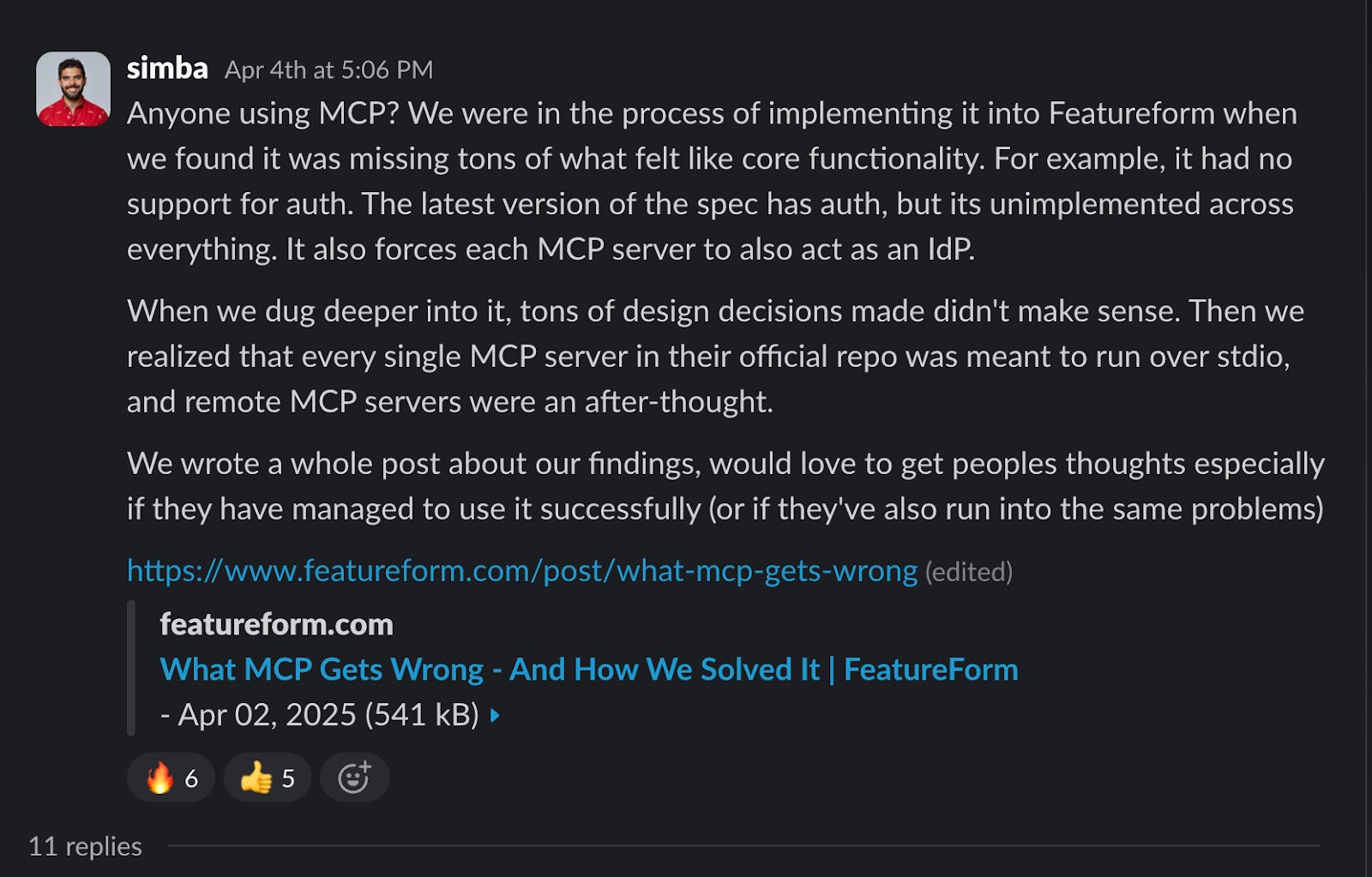
Simba and the Featureform team tried implementing Anthropic’s MCP but found gaps around authentication and remote server implementation.
They ran into missing auth, awkward “server-as-IdP” assumptions, and a spec that still defaults to stdio. Also, it turns out that getting authentication working without making users install stuff locally is tricky, even for basic things like Gmail or Slack.
They wrote a detailed blog post. So, has anyone actually made MCP work in production?
Key Insights:
Meb loves MCP’s vision but says it’s “getting bloated” and HTTP support only just landed.
Patrick Barker suggested simplifying everything by creating basic Python classes ("MCLib") that would cover 80 % of use cases without any server at all.
Featureform created mcp-engine, an open-source fork with real OAuth (🎉), for better auth handling and HTTP support.
Meb and others pointed out new HTTP bridges like MCO.
Takeaway:
MCP’s core idea is solid, but today you’ll need custom gateways—or a fresh spec like A2A—before enterprise auth and remote agents feel friction-free.
So until standardized transports, auth, and lightweight “local only” modes emerge, expect to write glue code (or wait for the next spec drop). Or just try out Featureform’s mcp-engine.
🤔 AI-2027 Forecast: Are We 24 Months from Super-Human AI?
Channel: #discussions
Asked by: Médéric Hurier
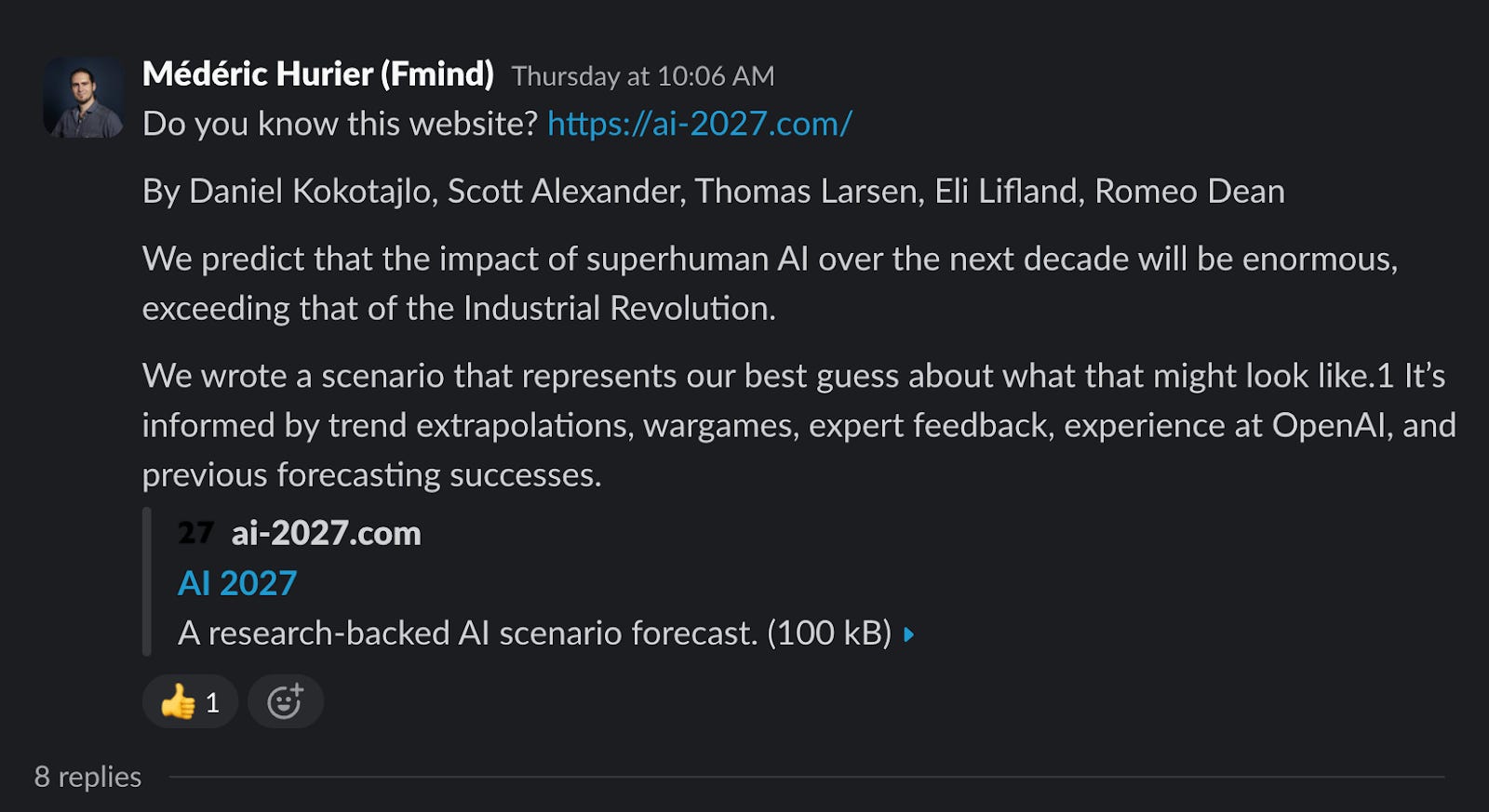
This site—AI-2027.com—claims superhuman AI will eclipse the Industrial Revolution… in the next 24 months. Given where we are and how fast we are making progress improving AI, is this just hype or a plausible forecast?
Key Insights:
Meb cited Yann LeCun: current architectures can’t reach AGI without new breakthroughs.
Ray Lucchesi dropped a counterpaper (“Reward Is All You Need”) that outlines a different path to superintelligence (ASI).
Cody Peterson argues we’ve had task-level “AGI” for years—this is just the next automation wave.
Ross Katz shared a podcast debating the scenarios—and respectfully disagreed with most of it.
Need creative, high-quality technical content? Happy to chat! Book a call with our Creative Engineers👇🏾
Takeaway:
Superhuman AI by 2027? Maybe not. But expect increased automation and productivity shifts—just don't count on Skynet anytime soon. So whether you’re bullish or skeptical, the path to AGI isn’t just about capability—it’s about intention, regulation, and application.
🔌 Tired of LangChain? Which Lightweight Libraries Are Devs Picking for Multi-LLM Workflows?
Channel: #llmops
Asked by: Yaz

LangChain is great but heavy and slow to keep pace with new model APIs (OpenAI, Claude, Bedrock, etc.). Which leaner libraries make vendor-hopping painless?
Key Insights:
LiteLLM (low-level, quick to add new endpoints).
BAML (declarative prompts + type-safe params).
Pydantic AI (minimal abstractions, Pydantic schemas).
Honorable mentions: ai-suite, Vellum.ai, combo of LiteLLM + LangSmith for tracing.
Takeaway:
If shipping fast matters more than swiss-army abstractions, LiteLLM + a thin orchestration layer might be the sweet spot. Need bulletproof prod? Stick to the provider’s own client—or be ready to patch fast.
🔗 See LangChain alternatives →
🛠️ AI Agents Everywhere—but How Do You Embed One in a Real Product?
Channel: #mlops-questions-answered
Asked by: Adesoji Alu
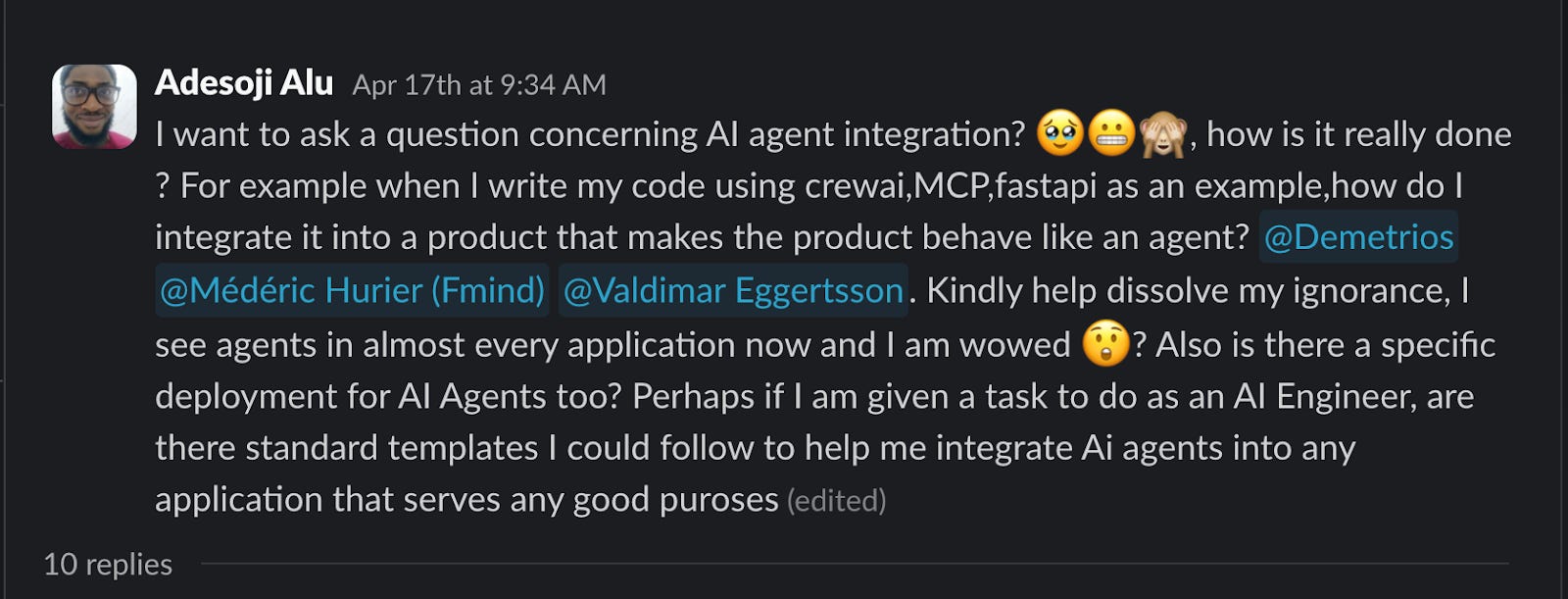
AI engineers hear the word “agent” a lot, but what does integration actually look like? Adesoji wants to turn CrewAI + FastAPI code into a real “banking-bot” product. What’s the end-to-end recipe for integrating an agent into production software?
Key Insights:
Sammer Puran suggested treating the agent like a microservice, with API endpoints and async comms.
Valdimar Eggertsson suggested treating the agent line like an employee. Here’s how:
Agents must reason over context, so you should define its goal.
Use tools/functions (GET invoices, POST transfers) to access data and take action.
Have a clear schema and documentation.
Include feedback loops to review performance.
Médéric Hurier explained how MCP/A2A lets you hot-swap tools; UI is “just software engineering.”
Kimmo suggests letting ChatGPT draft the workflow first—then harden with human review.
Elliot S shared a Udemy course for those looking to go deeper.
Takeaway:
Successful agents need clear tool contracts, strong auth, and tight feedback loops, which you then wrap in your web/mobile UI.
Treat your agent like a product component—not just an LLM wrapped in a prompt.
Blueprint
Define the goal and write a prompt framing the agent as an “employee.”
Expose tools (REST/GraphQL functions) with clear parameter schemas.
Add feedback loops: logs, evaluations, human review dashboards.
Secure it: auth, rate limits, field-level permissions—especially in FinTech.
🔗 Discover more integration tips →
🍿 LangChain vs. PydanticAI: Will the Framework Drama Reshape LLM Stacks?
Channel: #agents
Starter:Demetrios Brinkmann
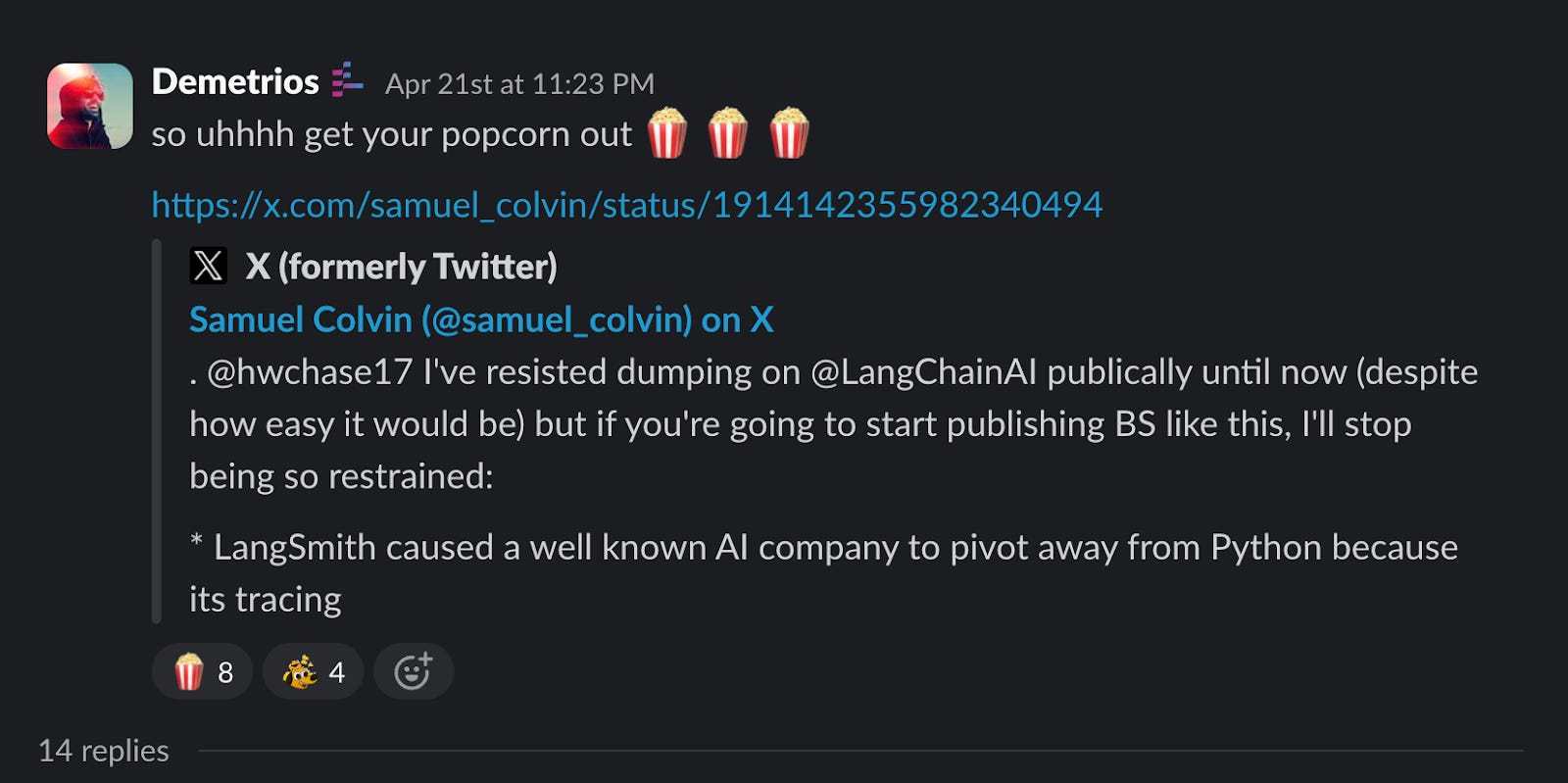
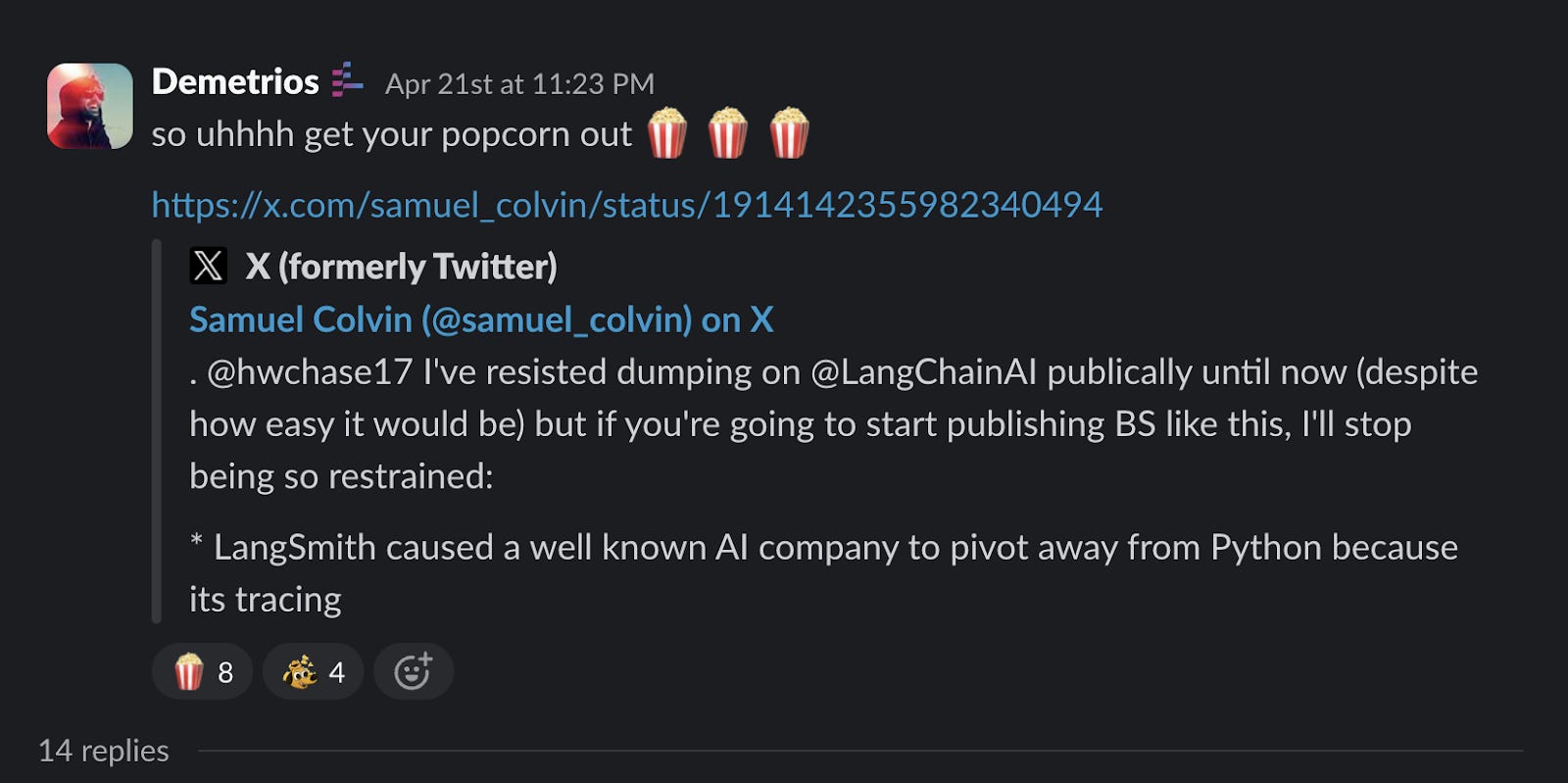
Demetrios shared Pydantic’s creator’s post on X that LangChain isn’t “production ready” and even blocks some companies for security reasons. Is LangChain’s complexity causing security issues and performance bottlenecks?
Key Insights:
Zachary Royals believes LangChain’s abstraction-heavy design will create long-term tech debt.
Bartosz Mikulski said there’s “no reason to use LangChain anymore”—and prefers PydanticAI’s cleaner API.
Cody Peterson offered a middle ground: LangChain isn’t ideal, but it’s helped developers ship faster.
Demetrios asked about LangGraph. LangGraph still powers real products—graphs beat if-statements for complex flows.
Takeaway:
LangChain’s future may depend on simplifying abstractions and rebuilding developer trust. Meanwhile, PydanticAI and lightweight libraries like LiteLLM and BAML are quickly becoming community favorites.
We created ⚡ BuildAIers Talking to be the pulse of the AI builder community—a space where we share and amplify honest conversations, lessons, and insights from real builders. Every Thursday and Friday!
📌 Key Goals for Every Post:
✅ Bring the most valuable discussions from AI communities to you.✅ Build a sense of peer learning and collaboration.
✅ Give you and other AI builders a platform to share your voices and insights.